Website Authority Building Strategies help businesses strengthen their online credibility, improve search visibility, and build trust with their target audiences. A website does not become authoritative simply by publishing more pages or collecting large numbers of backlinks. Its reputation develops through consistent content quality, relevant industry connections, positive user experiences, and reliable information. Search engines evaluate many signals when determining which pages deserve visibility, making authority an important part of a broader SEO strategy. Businesses that focus on long-term improvements can create a stronger digital presence and compete more effectively in their industries. By combining useful content, responsible link acquisition, technical improvements, and audience engagement, website owners can establish a foundation for sustainable online growth.
Building authority also requires a recognizable brand and a clear understanding of what makes a business valuable to its audience. Companies should communicate consistently, demonstrate expertise, and create resources that people genuinely want to reference. A strong brand identity can make it easier to earn attention from publishers, customers, and industry professionals. Resources from theultimatebranding can provide additional perspectives on developing a consistent brand presence. When branding and SEO work together, businesses can strengthen recognition while building relationships that support organic visibility. This approach helps a website become more than a collection of optimized pages. It develops into a trusted resource that audiences are more likely to revisit, recommend, and reference.
Create High-Quality Content That Demonstrates Expertise
Valuable content is one of the strongest foundations of website authority. Businesses should publish informative articles, detailed guides, original research, case studies, and practical resources that answer real audience questions. Each page should provide useful information rather than repeat existing material with minor changes. Demonstrating subject knowledge, explaining complex topics clearly, and supporting important claims with reliable sources can improve credibility. Content should also reflect the needs of its intended readers, using relevant examples and actionable advice. Updating older pages is equally important because outdated information can reduce usefulness and trust. A consistent publishing schedule helps maintain relevance, but quality should always take priority over volume. When readers find content genuinely helpful, they are more likely to share it, revisit the website, and reference it elsewhere.
Earn Relevant Backlinks From Trusted Websites
Backlinks remain an important part of building a website’s reputation because links from relevant external sources can help search engines understand how pages relate to other resources across the web. However, acquiring links should focus on relevance, editorial value, and genuine relationships rather than quantity. Businesses can earn quality backlinks through guest contributions, digital PR, original research, expert commentary, and useful industry resources. Creating statistics, templates, and detailed guides can also encourage other publishers to reference a website naturally. Before pursuing a link opportunity, marketers should evaluate the website’s topic, audience, content standards, and reputation. Avoid automated link schemes, irrelevant placements, and services promising large numbers of backlinks quickly. A thoughtful approach to link acquisition supports credibility and helps develop a healthier backlink profile over time.
Strengthen Technical SEO and Website Experience
A website needs a reliable technical foundation to support its authority and visibility. Visitors should be able to access pages easily, understand the navigation, and find relevant information without unnecessary difficulty. Businesses should improve loading speed, maintain mobile-friendly layouts, use secure HTTPS connections, and fix broken internal links. A logical website structure also helps search engines discover and understand important pages. XML sitemaps, appropriate indexing settings, canonical tags, and structured data can support effective crawling and content interpretation when implemented correctly. Technical improvements should be reviewed regularly because website updates, plugins, and new content can introduce problems. User experience matters too: clear menus, readable typography, accessible design, and helpful page layouts encourage visitors to stay engaged. A technically sound website makes valuable content easier to discover and use.
Build Brand Recognition and Industry Relationships
Website authority grows when people recognize a brand and associate it with useful information or dependable services. Businesses can strengthen recognition by maintaining consistent messaging, sharing expert insights, participating in relevant industry discussions, and developing relationships with publishers and professionals. Social media can help distribute content and introduce a brand to new audiences, although social engagement should not be treated as a direct substitute for SEO performance. Companies can also contribute to podcasts, webinars, professional communities, and industry publications to demonstrate their knowledge. These activities may lead to natural mentions, referral visits, and editorial backlinks. Consistency is important because trust develops through repeated positive experiences rather than one promotional campaign. A recognizable brand supported by useful contributions can make a website more memorable and increase the likelihood that others will recommend its resources.
Monitor Authority Growth and Improve Your Strategy
Building authority is an ongoing process, so businesses need to measure progress and adjust their approach when necessary. Useful indicators include referring domains, backlink relevance, organic traffic, keyword visibility, branded search activity, and engagement on important landing pages. Google Search Console can help monitor search impressions, clicks, and indexing issues, while analytics platforms provide information about visitor behavior and conversions. Backlink analysis tools can reveal new and lost links, competitor opportunities, and changes in the overall link profile. However, no single authority score from a third-party platform should be treated as a definitive measure of search engine trust. Review several indicators together and compare performance over consistent periods. Regular audits can reveal outdated content, technical problems, and missed opportunities, allowing businesses to make informed improvements.
Final Thought
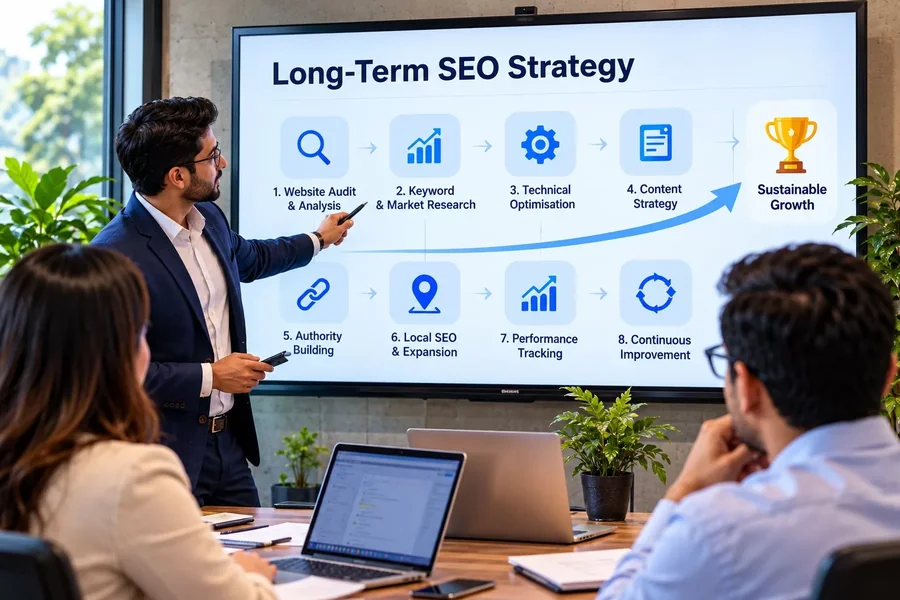
Developing a trusted website takes more than quick SEO adjustments or a large backlink count. Sustainable authority comes from publishing genuinely useful information, earning relevant editorial references, maintaining a strong technical foundation, and building meaningful relationships with an audience. Businesses should also invest in consistent branding so that their expertise becomes recognizable across different digital channels. Measuring progress helps identify which activities are producing value and where improvements are needed. Results may take time, particularly in competitive industries, but steady effort creates a stronger foundation for long-term visibility. By treating authority as an ongoing commitment to quality and credibility, website owners can build a digital presence that attracts visitors, earns trust, and supports wider business goals.
FAQs
What is website authority?
Website authority describes the perceived credibility and strength of a website based on factors such as content quality, backlinks, relevance, and reputation.
How can I improve my website authority?
Publish useful content, earn relevant backlinks, improve technical SEO, strengthen your brand, and maintain a positive user experience.
Do backlinks increase website authority?
Relevant backlinks from trustworthy websites can support credibility and search visibility, but link quality matters more than quantity.
How long does it take to build website authority?
The timeline varies depending on competition, website history, content quality, and link-building efforts. Meaningful improvements often require consistent work over several months.
Does social media help build website authority?
Social media can increase brand awareness, distribute content, and attract referral visitors, potentially creating opportunities for natural mentions and backlinks.
How can I measure website authority growth?
Monitor referring domains, backlink quality, organic traffic, keyword visibility, branded searches, and user engagement instead of relying on one authority score.