
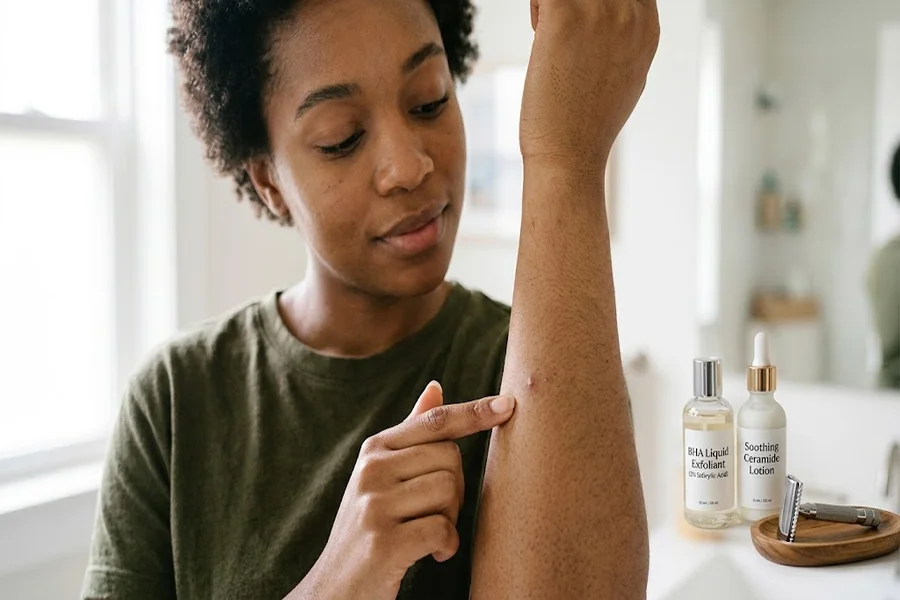
Ingrown hairs are one of those problems that seem minor until they aren’t. For some people they’re an occasional annoyance. For others they’re a persistent cycle of inflammation, dark marks and skin texture that takes months to settle.
The mechanism is simple. The solutions are less obvious than most advice suggests.
What’s actually happening
An ingrown hair occurs when a hair either grows back into the skin after being cut, or fails to break through the surface at all and curls beneath it. The body treats the trapped hair as a foreign object and mounts an inflammatory response — hence the redness, swelling and tenderness.
Two factors drive susceptibility.
Hair shape. Curly or coarse hair emerges from the follicle at an angle and is far more likely to re-enter the skin. This is why ingrown hairs disproportionately affect people with tightly curled hair, particularly on the face and bikini area.
Cutting angle. Shaving creates a sharp, angled tip on the hair shaft. That point pierces skin easily. Hair that’s been waxed or removed at the root grows back with a blunter tip and is somewhat less prone to ingrowing — though waxing carries its own risks around follicle trauma.
The prevention advice that works
Exfoliate consistently, not aggressively. The goal is preventing dead cells from blocking the follicle opening. Chemical exfoliants — salicylic acid particularly, because it’s oil-soluble and penetrates the follicle — outperform physical scrubs, which can irritate already-inflamed skin.
Shave with the grain. Against-the-grain shaving cuts hair below the skin surface, which produces a closer result and substantially increases ingrown risk. This is a genuine trade-off, not a myth.
Replace blades more often than feels necessary. A dull blade tugs at hair rather than cutting cleanly, distorting the follicle. Most people use blades several shaves past the point of diminishing returns.
Don’t tweeze. Extracting an ingrown hair with tweezers traumatises the follicle and frequently causes post-inflammatory pigmentation that outlasts the original problem by months.
What doesn’t work
Hot water and hard scrubbing. Both increase inflammation.
Alcohol-based aftershave on active ingrowns. It stings, which reads as effective, but dries and irritates skin that’s already compromised.
Waiting it out. Chronic ingrowns don’t resolve on their own if the underlying cause — hair type, removal method — stays constant.
The structural solution
For people with genuinely persistent ingrown hairs, the most reliable long-term answer is reducing the amount of hair that needs removing in the first place.
Laser hair removal works by targeting pigment in the follicle, reducing hair density over a series of sessions. Fewer hairs means fewer opportunities for ingrowing, and remaining hair is typically finer and less prone to it.
This isn’t instant. Treatment plans generally run eight to twelve sessions spaced several weeks apart, because hair grows in cycles and each session only affects follicles in their active growth phase. Clinics such as Beauty & Laser in Windsor, Ontario, set expectations around that timeline at consultation rather than promising quick results, which is the honest framing.
Worth noting: shaving between sessions is fine and expected. Waxing and plucking are not, because they remove the follicle target the treatment depends on.
Managing the marks left behind
Post-inflammatory hyperpigmentation from ingrown hairs often outlasts the ingrowns themselves. These flat dark marks fade slowly on their own; consistent sun protection prevents them darkening further, and ingredients like niacinamide and azelaic acid can support the process.
For marks that have persisted for years, professional treatment is generally more effective than topical management alone.