Interior decor is often mistaken for surface styling—choosing colours, picking furniture, and arranging objects until a room “looks finished.” But the spaces people actually enjoy living in rarely feel finished at all. They feel balanced, like they’ve settled into a rhythm that matches the people inside them.
What gives a room that quality is not decoration alone, but the relationship between space, function, and time. Interiors that last are not the most carefully staged ones—they are the ones that can absorb daily life without losing clarity.
Space as an Active Ingredient, Not a Void
Empty space is often treated as something that needs to be filled. In reality, it is one of the most important structural elements in interior design.
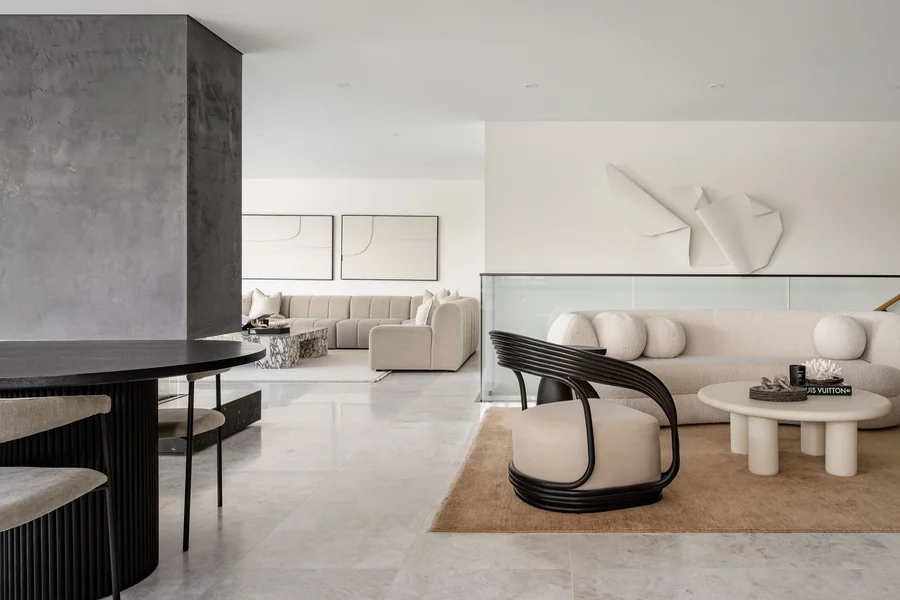
A room with breathing room feels calmer, regardless of how expensive or minimal its contents are. The distance between objects shapes how they are perceived. A single chair placed with intention feels more important than three chairs crowded together. A clear corner can feel more functional than one filled with unused decor.
Space also influences behavior. People move differently through open areas compared to congested ones. They pause longer in rooms that feel visually quiet. Good interiors use this without drawing attention to it.
Instead of thinking “what should I add here?”, a more useful question is often “what would happen if I left this open?”
Rhythm Is What Makes a Room Feel Designed
Even without conscious planning, every interior develops rhythm. The question is whether that rhythm feels intentional or accidental.
Rhythm comes from repetition and variation working together. Repeated materials create continuity, while variation in height, shape, or texture creates interest. A room with no repetition feels chaotic; a room with no variation feels static.
A well-balanced interior might repeat wood tones across furniture pieces, while varying their forms. Or it might maintain consistent spacing between objects while allowing contrast in scale.
When rhythm is present, a room feels organized without needing symmetry.
Furniture as Behavior, Not Just Object
Furniture is often chosen for its appearance first, but it is experienced through use. That difference matters.
A sofa is not just a shape—it determines how people gather, relax, or disconnect. A table influences whether interaction feels formal or casual. A chair defines posture, comfort, and how long someone stays in a space.
Designing around behavior changes how furniture is evaluated. Comfort becomes central, not optional. Durability becomes part of aesthetics, not separate from it.
In many cases, adaptability becomes the most valuable feature. For example, protective textile solutions such as slipcovers allow furniture to shift visually and functionally over time. Services like The Slipcover Company show how seating can be refreshed or protected without replacing the underlying piece, extending both its lifespan and its relevance in changing interiors.
Furniture, in this sense, becomes less about permanence and more about flexibility.
Light as a Structural Force, Not Decoration
Light is one of the few elements in a room that changes continuously without anything physically moving. That makes it a powerful design material.
Natural light alters perception throughout the day. Morning light reveals edges and detail. Midday light flattens contrast and increases clarity. Evening light softens everything, shifting the emotional tone of a space.
A well-designed interior does not resist these changes—it works with them. Artificial lighting should extend natural rhythm rather than overwrite it. Layered lighting allows the same room to support multiple moods: focused work, relaxed evenings, or quiet transition time.
When light is treated structurally, rooms feel different at different hours without needing any physical redesign.
Materials That Carry Time Instead of Fighting It
Materials are not just visual choices—they determine how a room ages.
Some materials degrade in ways that feel like decline. Others evolve in ways that feel like character. Wood, stone, linen, and aged metals tend to develop softness and variation over time. Synthetic surfaces often remain static or deteriorate unevenly.
Designing with aging in mind shifts the goal away from “newness” and toward continuity. A room that looks slightly different after years of use is not broken—it is participating in life.
This is where texture, patina, and wear become part of design rather than imperfections to avoid.
Imperfection as Evidence of Life
Over-controlled interiors can feel distant because they remove traces of interaction. A completely untouched space often feels less welcoming than one that shows subtle signs of use.
A softened fabric edge, a slightly worn surface, or a natural shift in material tone all communicate lived experience. These details make a room feel stable rather than fragile.
The goal is not disorder, but acceptance of gradual change. When a space allows itself to be affected by life, it becomes more believable.
Color as Atmosphere Rather Than Theme
Color is often overused as the primary identity of a room. In practice, it works better as atmosphere.
Warm tones tend to create closeness and comfort. Cooler tones support focus and clarity. Neutral palettes allow other elements—light, texture, objects—to take priority.
Instead of assigning a single “theme color,” effective interiors often distribute temperature across zones. A reading area might feel warmer, while a workspace might feel cooler, even within the same home.
Color becomes less about identity and more about function.
Storage as Silent Structure
Storage is often treated as something to hide, but it actually shapes how calm or cluttered a room feels.
Well-designed storage reduces visual noise and supports clarity. Built-in systems create continuity, while open storage requires curation to avoid overload.
The key is not just capacity, but visibility. What is seen influences how a room feels, even if it is technically organized.
Good interiors treat storage as part of the architecture rather than an afterthought.
Objects and the Weight of Attention
Not every object in a room should carry equal importance. In fact, hierarchy is what prevents visual fatigue.
Some objects are meant to stand out, while others support them quietly in the background. This balance is created through spacing, placement, and contrast.
A single object with breathing room feels intentional. Too many competing focal points reduce clarity.
Editing is often more powerful than adding.
Personal Identity Without Visual Overload
A room becomes meaningful when it reflects the person living in it, but that reflection does not require excess.
A few carefully chosen items can communicate more than an entire collection. Books, photographs, or meaningful objects gain strength when they are given space and context.
The goal is not to display everything personal, but to select what represents different layers of life.
This keeps the space expressive without becoming visually crowded.
Continuity Over Completion
The most useful shift in interior thinking is moving away from the idea of completion.
A completed room suggests finality. A lived-in room suggests evolution.
Furniture moves. Lighting changes. Objects rotate. Needs shift over time. Interiors that accept this remain usable and relevant longer.
Designing for continuity means creating systems that support adjustment rather than resisting it.
Final Thought: Interiors as Ongoing Balance
A home is not a fixed composition. It is a balance between structure and change, clarity and use, space and presence.
The most successful interiors are not defined by perfection, but by their ability to remain coherent while life happens inside them. When space, rhythm, light, and material are aligned with that reality, a room stops being an arrangement of objects and becomes something quieter and more enduring—a place that continues to make sense, even as everything around it shifts.