
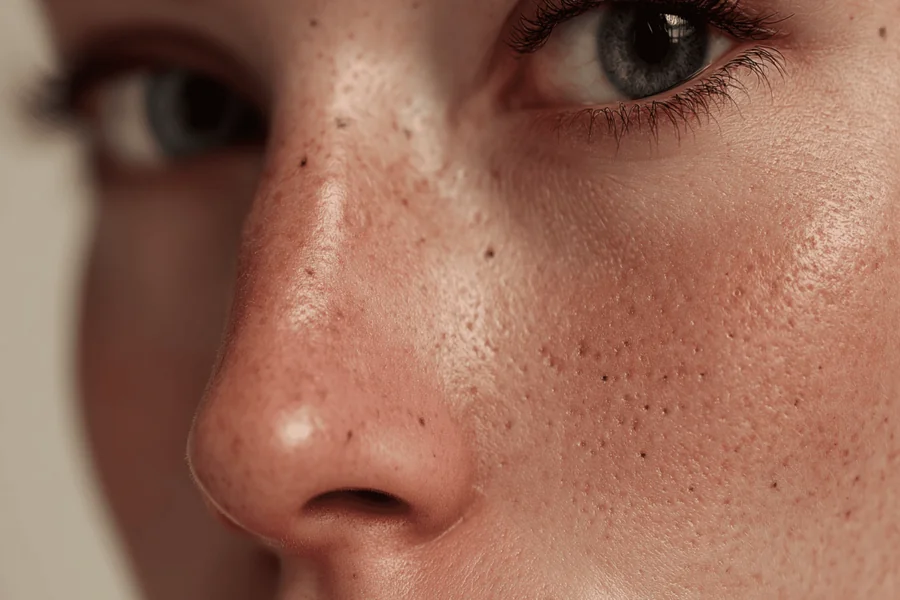
The Big vs Small Pores is one of the frequently discussed issues of skincare, particularly when it comes to people prone to attaining a smoother and more refined appearance of their skin. Looking closely at the mirror you may realize that there are parts of your face with more pores visible as compared to parts. This variance may influence the foundation make-up sitting on the skin and the level of comfort you have with your complexion. The size of the pores and visibility is different in individuals, although pores are a natural part of healthy skin and are very necessary.
And the reason behind the size of pores can make you select the correct skincare regime and prevent fantasy. It is impossible to remove pores totally but still, you can make them appear better. You will be able to encourage the healthy and more balanced skin in the long run by understanding what makes these differences and how to handle them.
What Are Pores and Why Do They Matter?
Pores are small holes found on the skin. They enable perspiration and the natural oil of the skin, sebum, to get out to the surface. Sebum is significant in ensuring that the skin is moisturized and it is not destroyed by the environment.
In every pore, there is a hair follicle and a sebaceous gland. At a balance of oil production, pores work as a normal and they might not be very visible. With a rise in oil production or an obstruction by dead skin cells and debris, however, it can distend and look bigger.
A healthy skin needs pores. It is not aimed at eliminating them but maintaining them clean and operational. Balanced hydration and protection against irritants This is achieved through healthy pores.
Why Some People Have Large Pores
The huge-appearing pores are usually associated with either oily or combination types of skin. In case sebaceous glands produce more than the required amount of oil, the pore can open up to lose it. That is why such parts of the body as nose, forehead, and cheeks tend to have more visible ones.
The role of genetics is also significant. When your parents have noticeable pores then chances are that you will have them too. The level of skin thickness and the amount of oil is mostly hereditary.
Another important factor is clogging. The pore is extended by a plug that is formed by oil combined with dead skin cells and dirt. With time, pores may be enlarged permanently due to frequent clogging.
Aging contributes as well. When collagen and elastin reduce, skin becomes soft. It will be prone to sagging and appear wider without the good support around the pore. Collagen fibers are broken down by the Sun damage, thereby accelerating this process.
Oil production can be increased in response to hormonal variations (during puberty or pregnancy), and momentarily enlarge pores.
Why Some People Have Small Pores
Small pore is mostly related with the normal to dry skin. In cases of reduced production of oil, there is less expansion of pores required. This makes them less visible.
Good collagen support is also useful in ensuring that pores are tight and refined. The skin of younger is usually smoother since the level of collagen is higher. Hard skin keeps the pores fixed so that they do not stretch.
Regular skincare practices may also help in making pores appear smaller. Frequent cleansing, exfoliation, and sun protection can be used to avoid clogging and collagen deterioration.
It should be mentioned that small pores do not necessarily imply fine skin. Even a dry skin with small pores may be sensitive or irritated. Both the skin types have their demands and problems.
How Skin Type Affects Pore Appearance
The pore size and visibility are highly dependent on the skin type. Due to increased production of sebum, oily skin is likely to have bigger pores. The T- zone of combination skin usually has large pores whilst the rest of the skin is smoother.
Dry skin typically contains smaller pores though they may appear rough or flaky unless well hydrated. The dehydration may even cause the pores to be more prominent since the rest of the skin is not plummy.
Inflammation of the sensitive skin can briefly temporarily enlarge the pores. Irritation impairs the skin barrier and has a generalized impact on texture.
The first step in the way of the correct choice of products and treatments is to understand your skin type. By wearing products, which suit your particular needs, you are able to avoid both unnecessary irritation and oil imbalance.
Can You Change Pore Size?
You can never make your pores permanently small since genetics are a major determinant of the size of your pores. Nevertheless, you can make them less conspicuous.
To maintain cleanliness of pores is vital. Washing twice a day with soft soap extinguishes the surplus of oil and dirt. Salicylic acid chemical exfoliants will aid in clearing clogged pores and prevention of stretching.
Another good ingredient is retinol. It enhances cell turnover and collagen production that helps in improving the skin texture with time.
Hydration also plays a role. A non-comedogenic, lightweight moisturizer maintains the balance in the skin and limits the production of excess oil.
The collagen can be stimulated and the surface of the skin can be refined with professional treatments, including chemical peels, microneedling, and laser therapy. They involve several sessions and these procedures must be done by trained personnel.
Consistency is key. None of the products or treatments will improve the appearance of the pores immediately, but consistent care will make some difference.
Common Myths About Pores
A mythical fallacy is that the pores open and close like doors. In fact, the pores lack muscles. Steam can temporarily loosen the debris and are therefore easily cleaned, but it does not permanently reduce pores.
The other myth is that a tough scrub will help to reduce the size of pores. Excessive shedding of the skin may cause irritation on the skin and result in more oil, which may aggravate the look of pores.
There is an opinion that pores can be seen only on the oily skin. Although it is usually oily skin that will exhibit big pores, aging and sunburns can result in more obvious pores on any skin.
Knowing these myths will enable you to shun harmful habits and shift to good skincare habits.
Final Thought
Large Pores Vs Small Pores is a subject that has its basis in both genetics as well as lifestyle. You cannot alter the size of your natural pores completely and only affect the way they are perceived. With a regular skincare schedule, ensuring your skin is not damaged by the sun, and the use of treatments that help your skin type, you are likely to have a clearer and more sophisticated complexion. Long-term skin confidence is based on embracing realistic expectations and healthy habits.
FAQs
What causes large pores?
Large pores are often caused by excess oil production, clogged pores, aging, sun damage, and genetic factors.
Are small pores better than large pores?
Small pores are less noticeable, but all pore sizes are normal and necessary for healthy skin function.
Can ice shrink pores permanently?
Ice can temporarily tighten the skin and reduce pore visibility, but it does not permanently change pore size.
Does oily skin always mean large pores?
Oily skin is commonly associated with larger pores, but genetics and aging also play significant roles.
Can makeup make pores look smaller?
Certain primers and foundations can temporarily blur pores and create a smoother appearance.
Is laser treatment effective for pore reduction?
Laser treatments can stimulate collagen production and improve skin texture, making pores appear smaller over time.