A water massage bed applies pressure through a waterproof surface. Thai massage combines compression with assisted movement. Swedish massage uses gliding and kneading strokes applied directly to the body. Although all three are offered in settings associated with relaxation, the physical work involved is different.
Those differences affect how a session feels, how pressure is adjusted and how much the body moves during treatment. Comparing the techniques gives a clearer picture than describing each one as “relaxing” or “deep.”
How a Water Massage Bed Applies Pressure
A dry water massage bed contains water jets beneath a flexible, waterproof barrier. The user lies on the surface, fully clothed, while the jets move underneath. Water remains inside the equipment; the user feels pressure transmitted through the barrier.
Depending on the model, controls allow changes to pressure, speed and the area covered. A user can select a broader sequence or concentrate the jets within a particular zone. The equipment supplies a repeatable pattern of pressure while the body remains supported in a largely fixed position.
The word “water” can cause confusion here. A dry massage bed does not immerse the body. Experiences involving a pool, a bath or a practitioner supporting someone in water belong to a different comparison.
Thai Massage: Compression and Assisted Movement
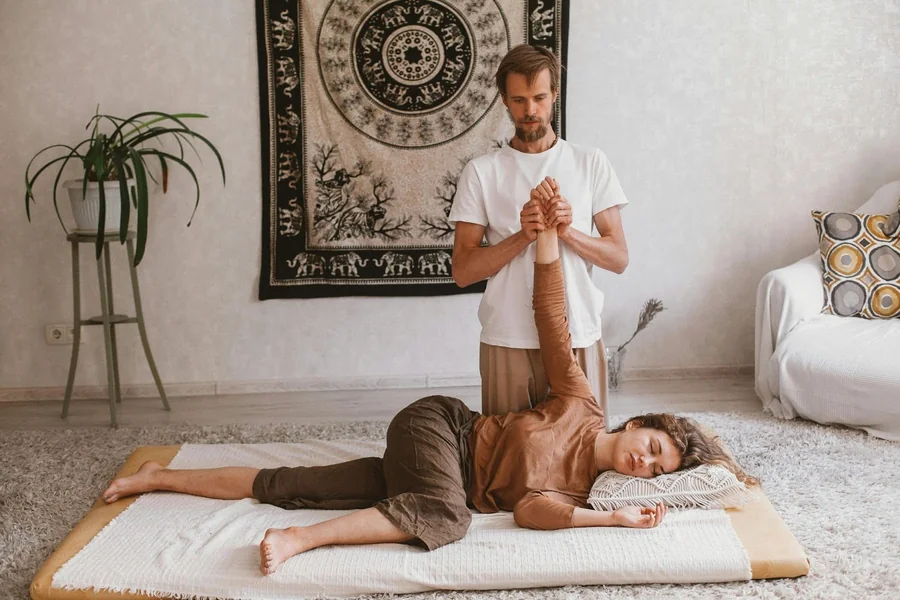
Traditional Thai massage is usually performed on a floor mat, with the recipient wearing loose clothing. Oil is generally unnecessary because the practitioner works through the clothing rather than sliding across the skin.
The technique combines rhythmic compression with stretching and changes of position. Practitioners use their hands and, where appropriate, elbows, knees or feet to apply pressure. The recipient may lie on their back, turn onto their side, lie face down or sit during different parts of the session.
Movement is a substantial part of the experience. During an assisted stretch, the practitioner supports and moves a limb while positioning the rest of the body. This introduces a mechanical element that a water massage bed does not provide: the relationship between pressure, leverage and joint position.
The intensity therefore involves more than how firmly someone presses. The extent of a stretch and the position in which it is performed also affect the sensation.
Swedish Massage: Gliding and Kneading
Swedish massage works primarily through direct manual contact. Two characteristic techniques are effleurage, consisting of gliding strokes, and petrissage, which involves kneading. A session can also include rhythmic tapping and other movements.
Oil or lotion is commonly used to allow the hands to move smoothly over the skin. In a typical table session, a sheet or towel covers the body, with only the area being treated exposed.
A gliding stroke moves along the body; kneading lifts, compresses and moves soft tissue beneath the hands. The practitioner can vary the contact area, direction, pace and pressure within the same sequence.
Swedish massage is often described as gentle, but that description says little about a particular appointment. The amount of pressure is adjustable. Its defining features are the techniques used, rather than one fixed level of intensity.
Where the Differences Become Noticeable
When comparing Thai and Swedish massage with a water massage bed, consider how each method would approach the same area of the body.
For the back, a water massage bed moves jets beneath the supporting surface. In Swedish massage, a practitioner can work along the back with gliding strokes, then change hand position and use kneading over selected muscles. A Thai session can combine compression with changes in body position and assisted stretches involving the trunk or surrounding limbs.
These are different ways of applying force. Increasing the jet setting does not reproduce a Thai stretch. Increasing the pressure of a Swedish stroke does not reproduce the movement of water beneath a membrane.
The methods also differ in how adjustments happen. On a water massage bed, the user changes the available settings. During a manual session, the recipient can ask the practitioner to alter a particular movement, spend longer on one area or leave another area alone. The practitioner can change both the technique and the body position.
What a Comparison Can Establish
Differences in technique are easier to establish than differences in clinical effectiveness. A description of how a treatment works does not, by itself, demonstrate that it produces better pain relief or longer-lasting results.
The U.S. National Center for Complementary and Integrative Health reports that evidence for massage varies by condition. In an evaluation of massage for low-back pain, evidence comparing different massage types was insufficient to establish whether one type was more effective than another. That finding does not provide a ranking of water massage beds, Thai massage and Swedish massage.
For someone choosing an appointment, the practical distinctions remain useful. A water massage bed offers machine-controlled pressure while the user stays clothed and largely still. Traditional Thai massage involves compression, repositioning and assisted stretching. Swedish massage centres on direct manual strokes, commonly with oil or lotion.
The useful question is what the person wants to experience: water-driven pressure beneath a supporting surface, assisted movement through a clothed session, or hands-on work using gliding and kneading techniques.